
Cart is empty
20 Oct 2026

Singapore Home & Renovation Guide
How to Choose and Install the Perfect Ceiling Fan in Singapore
Choosing the right ceiling fan and installing it in the right place matters a lot, especially in Singapore. The weather remains warm most of the year, so a good ceiling fan helps keep your room cooler and more comfortable while reducing reliance on air conditioning, saving you money.
Planning & Room Assessment
Key Considerations Before Choosing a Ceiling Fan
Whether you're renovating your home or undertaking a larger interior renovation in Singapore, this guide will help you make the best choice. You will learn how to measure your room, check the ceiling, choose the fan, and set it up the right way.
A good ceiling fan does more than just spin—it improves airflow, complements your room's design, and operates smoothly. Before making a purchase, learn what to consider and how to ensure safe, proper installation.
Room Dimensions & Blade Size
Start by measuring the room where you want to place the fan. Smaller rooms need fans with shorter blades—around 36 to 44 inches. Bigger rooms need longer blades, usually more than 52 inches, to circulate air effectively across the entire area.
Ceiling Height & Downrods
Check how high your ceiling is before selecting your model. Start by measuring the vertical clearance in the room where you plan to install the fan. For taller ceilings, choose fans that hang lower using special rods to spread the air properly.
Optimal Room Placement
Centre the fan in the room so airflow reaches every corner evenly. Proper positioning ensures balanced circulation and helps the fan complement the natural layout of your furniture and lighting fixtures.
Safety & Clearance Requirements
Make sure the fan stays at least 18 inches away from the walls and more than 7 feet above the floor. This setup helps the air reach more parts of the room and keeps people safe from bumping into the blades
Quick Reference Guide
Matching Your Ceiling Fan to Your Space
Every room and ceiling structure in Singapore has unique requirements. Use this quick comparison table to match blade span, motor type, and mounting hardware to your interior layout.
| Factor | Recommended Fan Setup | Placement & Mounting Notes |
|---|---|---|
| Smaller Rooms | Shorter blades—around 36 to 44 inches for compact bedrooms, studies, or dining corners. | Centre the fan in the room and maintain at least 18 inches of clearance from surrounding walls. |
| Bigger Rooms | Longer blades—usually more than 52 inches for living halls and master bedrooms. | Ensure wide, unobstructed airflow coverage and keep blades more than 7 feet above the floor. |
| Concrete Ceilings | Standard hugger or downrod ceiling fan depending on floor-to-ceiling height. | Requires strong bolts anchored directly into the structural concrete slab for secure support. |
| False & Sloped Ceilings | Fans compatible with reinforcement brackets or extension rods for taller/angled roofs. | False ceilings need extra support bars so the fan doesn't fall; taller ceilings use special rods to hang lower. |
| Motor & Lighting | DC motor ceiling fan with integrated dimmable LED lighting. | Spins more quietly, offers more speed settings, and reduces long-term electricity costs compared to AC motors. |
Convenience & Automation
Understanding Control Options
Modern ceiling fans offer flexible control methods that make daily operation effortless, whether you prefer traditional wall access, handheld remotes, or full smart home automation.
Remote Control & Wall Switches
You can control most fans using a remote or a switch on the wall. Some fans let you use both, which makes them even easier to manage.
Effortless Adjustments
Dual control options allow you to adjust the fan speed and lighting without getting up, giving you convenient access from anywhere in the room.
Smart Ceiling Fan Technology
Some modern fans can connect to Wi-Fi or integrate with smart home systems. You can use your phone or voice to turn them on and off, or change settings for a modern, cohesive look.
Pre-Installation Checklist
Installation Requirements and Preparation
Check what kind of ceiling and electrical access you have before installation begins. Concrete ceilings, false ceilings, and sloped ceilings each need different parts to hold the fan safely.
01
Concrete Ceilings
Concrete ceilings need strong bolts to anchor the mounting bracket securely. Always use the correct heavy-duty mounting parts designed for your ceiling type.
02
False & Sloped Ceilings
False ceilings need extra support bars so the fan doesn't fall, while sloped or high ceilings require angled mounts or extension rods for stable suspension.
03
Electrical Point Accessibility
Before installation, check whether there's an existing powerpoint at the desired fan location. If not, hire a licensed electrician to install one safely.
04
Older Homes & HDB Flats
Checking electrical points is a must in older homes or HDB flats where power points are in fixed places. A ceiling fan installation expert in Singapore can complete this task quickly and safely.
Safety & Interior Styling
Professional Installation & Aesthetic Alignment
Ensuring both structural safety and visual harmony will give you the best long-term experience from your ceiling fan investment.
When to Hire a Professional
Consult a professional if your ceiling requires additional support or if new wiring is needed. A skilled installer checks everything, from the fan's weight to the wires. Incorrect installation could lead to damage or safety hazards.
Benefits of Professional Services
Professionals do more than simply install the fan. They inspect the space, attach the fan properly, and make sure it works well. You won't have to worry about unstable fans or loose screws, ensuring reliable long-term performance.
Fan Style Matching Interior Themes
Pick a fan that matches the rest of your room. Neutral colours and modern designs complement contemporary homes, while wooden finishes suit traditional interiors. Ensure the fan complements your furniture, flooring, and walls for a cohesive design.
Integration with Existing Fixtures
Your fan should fit with your existing lights and decorations already in the room. You can find fans that come in different colours and materials. Some fans let you change the covers or lights so they blend in better.
Smart Savings
Energy and Cost Efficiency
In Singapore's warm climate, choosing an energy-efficient fan helps keep daily cooling expenses low while maintaining year-round comfort.
Power Consumption Awareness
Ceiling fans consume far less energy than air conditioners. A DC motor fan with LED lighting reduces long-term electricity costs. Always check the fan's energy consumption before purchasing.
Long-Term Value
Although feature-rich fans may have a higher upfront cost, they offer long-term savings. These fans last longer and don't need as much care over their lifespan.
Avoiding Costly Mistakes
When you engage a qualified team for ceiling fan installation in Singapore, you also avoid wiring or mounting mistakes that might cost more to fix later.
Everyday Care
Maintenance and Longevity
Simple routine care keeps your ceiling fan running smoothly, quietly, and safely for years to come.
Routine Cleaning and Inspection: Wipe your fan once a month to prevent dust from collecting. Periodically check screws and components to ensure they remain tight and the fan operates without vibration.
Noise and Wobble Prevention: If the fan starts making noise, turn it off and check the blades. Noise usually indicates loose components or imbalance. Fixing it early helps the fan last longer and run more quietly.
Interior Design Inspiration
Ceiling Fan Styles for Singapore Homes
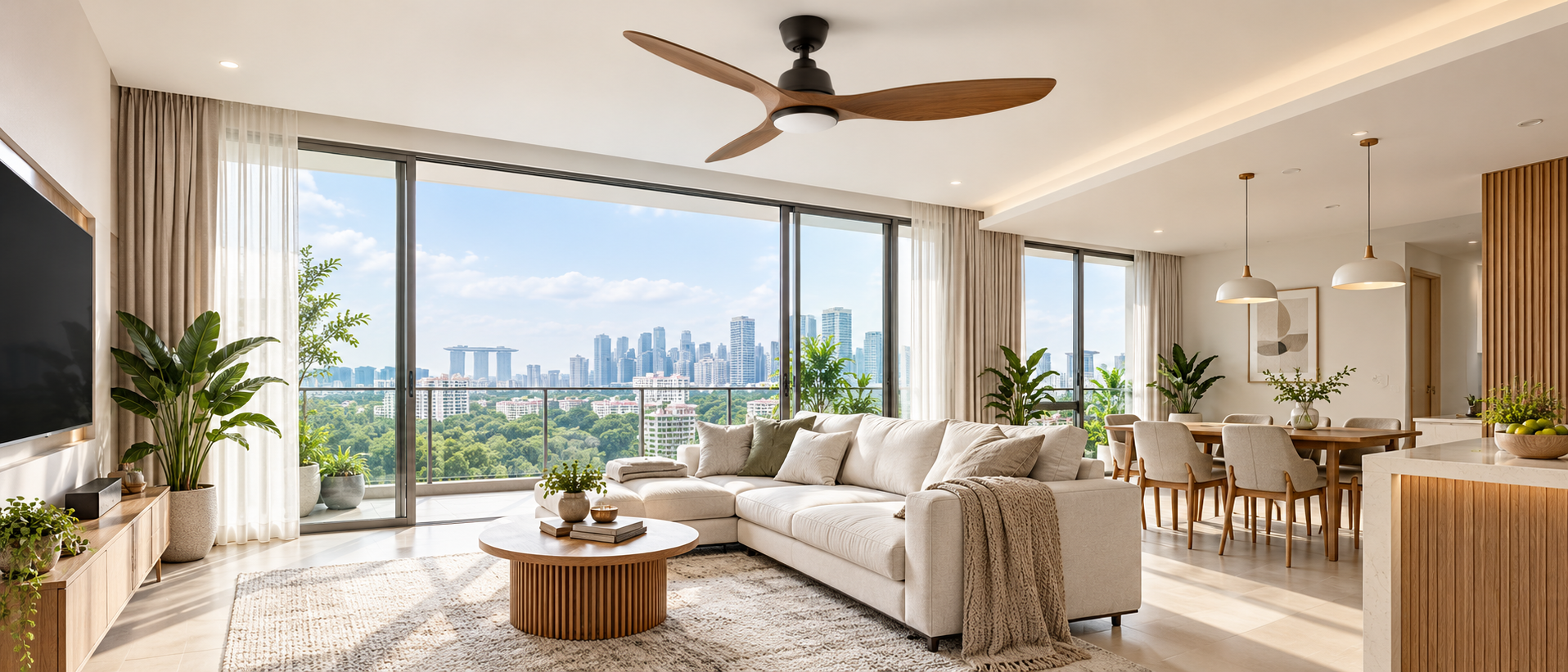
Explore how different ceiling fan designs, blade finishes, and integrated LED lights look inside modern Singapore interiors.

Contemporary Blade & Motor Design

Efficient Airflow for Living Spaces

Integrated LED Lighting & Clean Finish

Seamless Ceiling Integration
The End Note
Upgrade Your Home Comfort Today
A well-chosen ceiling fan enhances comfort, reduces energy usage, and complements your home's design. You need to think about the size of your room, your ceiling type, and how much air you want to move. In Singapore, a fan becomes very useful, especially when it gets hot and humid.
If you're renovating your home or undertaking a full interior renovation, invest time in selecting the ideal ceiling fan. Ensure it functions efficiently, suits the space, and is installed correctly. With careful planning and professional assistance, you can install a fan that enhances aesthetics, performs reliably, and improves daily comfort.





WhatsApp
×