
Cart is empty
18 Sep 2026
PanelCraft Glass Brick Guide
Glass Brick vs Glass Block:
What's the Difference?
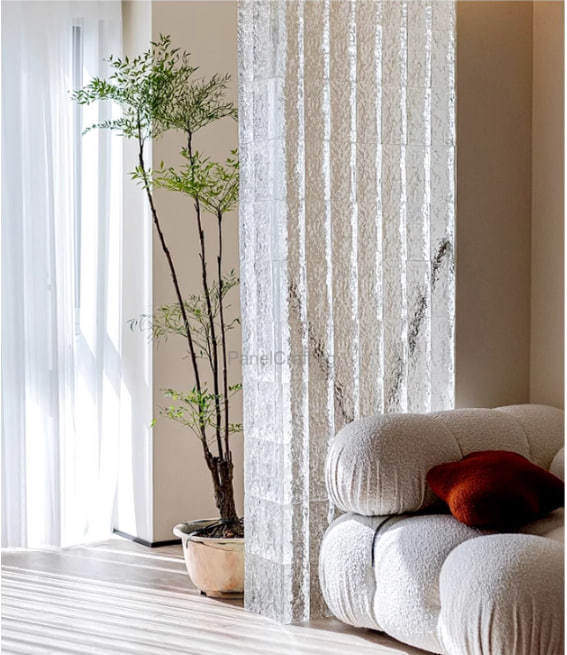
Glass brick and glass block are often used as interchangeable terms, but they can differ in construction, weight, appearance, light behaviour, privacy and the way they are incorporated into an interior. This guide explains the practical differences and explores how decorative glass bricks can be used for divider walls, partitions and feature spaces.
Product & Design Reference
Explore Glass Brick Types & Colours
Decorative glass bricks are available in different shapes, surface patterns and colour finishes. The pattern of the glass affects how light passes through the material and also changes the overall appearance of the completed wall.
Rectangle designs create a more linear architectural appearance, while square formats provide a balanced modular pattern. Clear crystal styles maintain a brighter look, while coloured glass can turn the wall into a stronger visual feature.

Rectangle Glass Brick
Rectangular glass bricks can be arranged horizontally or vertically. Different crystal textures create different reflection, distortion and light effects, making this format suitable for linear divider walls and contemporary features.
View More Types →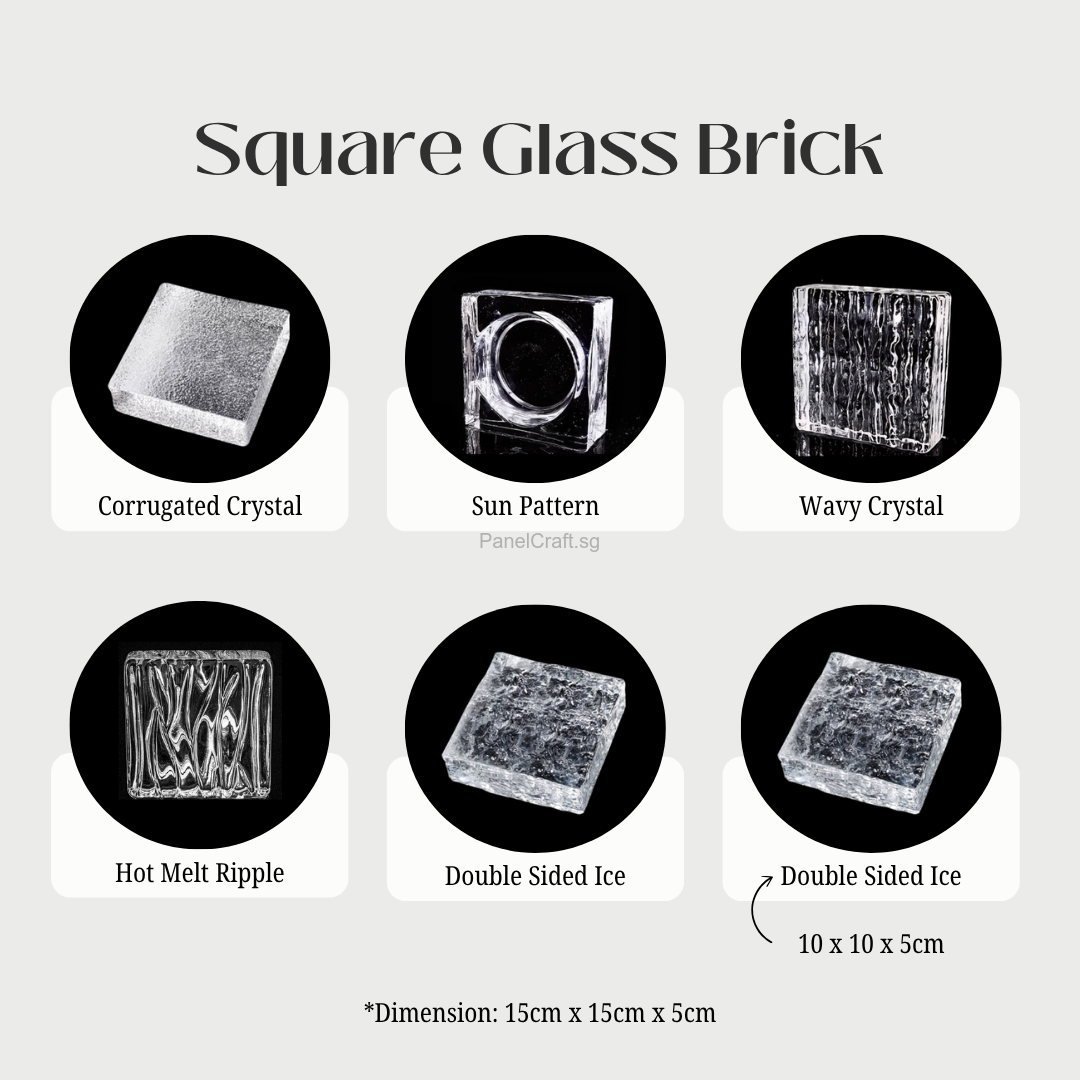
Square Glass Brick
Square glass bricks create a consistent grid arrangement. They work well for full-height dividers, smaller feature walls and areas where a balanced and symmetrical appearance is preferred.
View More Types →
Colour Options
Coloured glass changes the character of the feature wall significantly. The colour becomes especially noticeable when sunlight or decorative lighting passes through the glass and reflects into the surrounding space.
View More Colours →Understanding the Difference
Glass Brick vs Glass Block
The terms are not always used consistently between suppliers. In PanelCraft's decorative range, glass brick refers to solid decorative glass pieces, while conventional architectural glass block commonly refers to hollow glass units.
Their different construction affects weight, appearance, light behaviour, privacy and the types of applications for which they are commonly selected.
| Comparison | Glass Brick | Glass Block |
|---|---|---|
| Construction | Solid decorative glass piece in PanelCraft's range. | Commonly manufactured as a hollow architectural glass unit. |
| Weight | Generally heavier because the body consists of solid glass. | Usually lighter than comparable solid glass because the centre is hollow. |
| Appearance | Crystal-like decorative appearance with stronger reflections and visual depth. | More commonly associated with the traditional architectural glass-block appearance. |
| Light Behaviour | Patterns may refract, distort and reflect light depending on the glass design. | Textured surfaces commonly diffuse light and reduce direct visibility. |
| Privacy | Depends on the selected pattern; clear and heavily textured options behave differently. | Many conventional blocks are designed specifically for light transmission with privacy. |
| Design Choices | Square, rectangular, patterned, crystal and coloured decorative styles. | Typically standard architectural formats with different surface textures. |
| Typical Applications | Feature walls, divider walls, entrances, decorative partitions and interior accents. | Partitions, windows, bathrooms and privacy-related architectural applications. |
| Overall Character | Best suited when the glass itself is intended to become a visible design element. | Often selected when translucent separation and privacy are the main objectives. |
Practical Considerations
What Actually Matters in a Renovation?
Choosing a glass feature involves more than selecting a pattern. The size of the wall, amount of daylight, surrounding finishes, installation location and required privacy level all affect how the final feature will look and perform.
A lightly textured design maintains a stronger visual connection between two areas, while deeper textures create more distortion. Coloured glass produces another effect entirely, particularly when placed close to windows or decorative lighting.
Weight & Support
Solid glass pieces can become heavy when multiplied across a large feature wall. Wall dimensions, supporting surfaces and installation arrangement should therefore be considered before the design is finalised.
Pattern & Privacy
Different glass textures provide different levels of visibility. A fine pattern may soften the view, while deeper crystal textures can distort shapes more strongly and provide greater screening.
Surrounding Materials
Glass can look very different beside timber, stone, microcement, painted walls or metal frames. The surrounding palette should be considered together with the glass instead of selecting each material independently.
Wall Proportion
A full-height glass wall creates a stronger architectural statement, while a narrow or partial-height divider produces a lighter effect. Brick orientation also changes how tall or wide the completed feature appears.
Light & Visual Effect
How Light Changes the Look of Glass Brick
One of the main reasons glass bricks are used in interior design is their interaction with light. Unlike an opaque wall, glass responds differently throughout the day and can create changing reflections, highlights and shadows.
Natural Daylight
Near windows, clear and crystal glass can capture daylight and help brighten adjoining spaces. The appearance changes as the sun moves and the direction of incoming light changes.
Warm Interior Lighting
Warm lighting tends to make clear glass appear softer and can create warmer highlights inside textured or coloured glass, especially during evening use.
Decorative Lighting
Lighting placed near a glass feature can accentuate surface patterns and reflections. Crystal designs generally create a stronger effect than completely smooth glass.
Application Examples
Where Can Glass Bricks Be Used?
Glass brick walls work particularly well when an interior needs separation without the visual heaviness of a completely opaque wall. They can maintain brightness and depth while still creating a clear boundary between different zones.
Bathroom & Toilet Areas
Glass can divide wet and dry zones, create a feature beside a vanity, or allow light to enter an enclosed bathroom while providing a degree of visual screening.
Divider Glass Walls
A divider can separate an entrance, living room, dining space or circulation area without completely blocking visual depth between the two sides.
Decorative Feature Walls
When the main objective is visual impact, textured or coloured glass can turn an otherwise functional partition into an architectural feature.
Planning Before Installation
What Should Be Confirmed Before Building the Wall?
A better result starts with planning the wall before ordering materials. Final dimensions should be coordinated with the selected glass size, surrounding finishes and intended location of the feature.
01
Confirm Wall Dimensions
Measure the intended width and height. Brick dimensions, joints and the final arrangement should be considered when determining the completed feature size.
02
Select the Pattern
Compare clear, textured and coloured designs based on the amount of privacy, light transmission and decorative effect required for the space.
03
Check Surrounding Finishes
Flooring, wall finishes, framing and nearby carpentry should be considered so that the completed feature integrates cleanly with the rest of the renovation.
04
Plan Lighting & Visibility
Consider where daylight and artificial lighting will come from and what will be visible behind the glass when viewed from either side.
Choosing the Right Option
Which One Should You Choose?
Start with the purpose of the wall rather than the product name. Decide whether the priority is decoration, privacy, natural light or simply creating separation between two areas.
Once the intended function is clear, the most suitable glass format, texture and colour becomes much easier to determine.
Choose Decorative Glass Brick When
You want the glass wall itself to become a visible design feature, prefer crystal or patterned effects, or want to introduce colour, reflection and texture into the space.
Choose Conventional Glass Block When
Your main priority is a traditional translucent partition, architectural glass-block appearance or privacy-oriented wall rather than a strongly decorative feature.
For Smaller Spaces
Clear or softly textured designs usually maintain greater visual openness. A lighter-looking glass feature can separate a space without making the room feel heavily enclosed.
For Statement Feature Walls
Strong textures, distinctive brick shapes and coloured glass create greater visual impact, particularly when natural or decorative lighting highlights the glass surface.
Everyday Care
Cleaning & Maintaining a Glass Brick Feature
Like other glass surfaces, decorative glass bricks can show dust, fingerprints or water marks more clearly under certain lighting. Regular cleaning helps maintain the clarity and reflective quality of the feature.
For general cleaning, the visible glass surface can be wiped using normal glass-cleaning methods and a soft cloth. Textured designs may require slightly more attention because recessed surface patterns can collect dust more easily than completely smooth glass.
In bathrooms or wet areas, periodic cleaning helps reduce visible water marks and soap residue. The surrounding joints and finishes should also be kept clean so that the complete feature maintains a consistent appearance.
Frequently Asked Questions
Glass Brick FAQ
Does glass brick completely block visibility?
Not necessarily. Privacy depends on the selected glass pattern. Clearer designs retain more visibility, while deeper textures distort the view more strongly.
Can glass brick be used as a divider wall?
Yes. Divider walls are one of the common decorative applications. They allow the space to be separated while retaining light and visual depth compared with a completely opaque partition.
Should I choose clear or coloured glass?
Clear glass is generally easier to integrate into different interior styles, while coloured glass creates a stronger statement. The surrounding finishes and lighting should also be considered.
Does the glass look the same under every lighting condition?
No. Reflections, colour and texture can look different under daylight, warm lighting and cool lighting. This variation is part of the visual character of decorative glass.
What should I prepare before asking for a quotation?
Prepare the approximate wall width and height, preferred glass brick design and a photo of the intended installation location. This provides a clearer basis for discussing available options.
PanelCraft Glass Brick Catalogue
Explore More Designs, Sizes & Pricing
Browse PanelCraft's available decorative glass brick patterns, colours, dimensions and pricing in the full catalogue after deciding which style best suits your space.
If you already have a wall location in mind, prepare the approximate width and height together with your preferred design before requesting a quotation.
Interior Design Inspiration
Glass Brick Design in Interior Spaces
These references show how glass bricks can be incorporated into different layouts. The final appearance varies depending on the glass pattern, wall proportion, surrounding finishes and lighting.
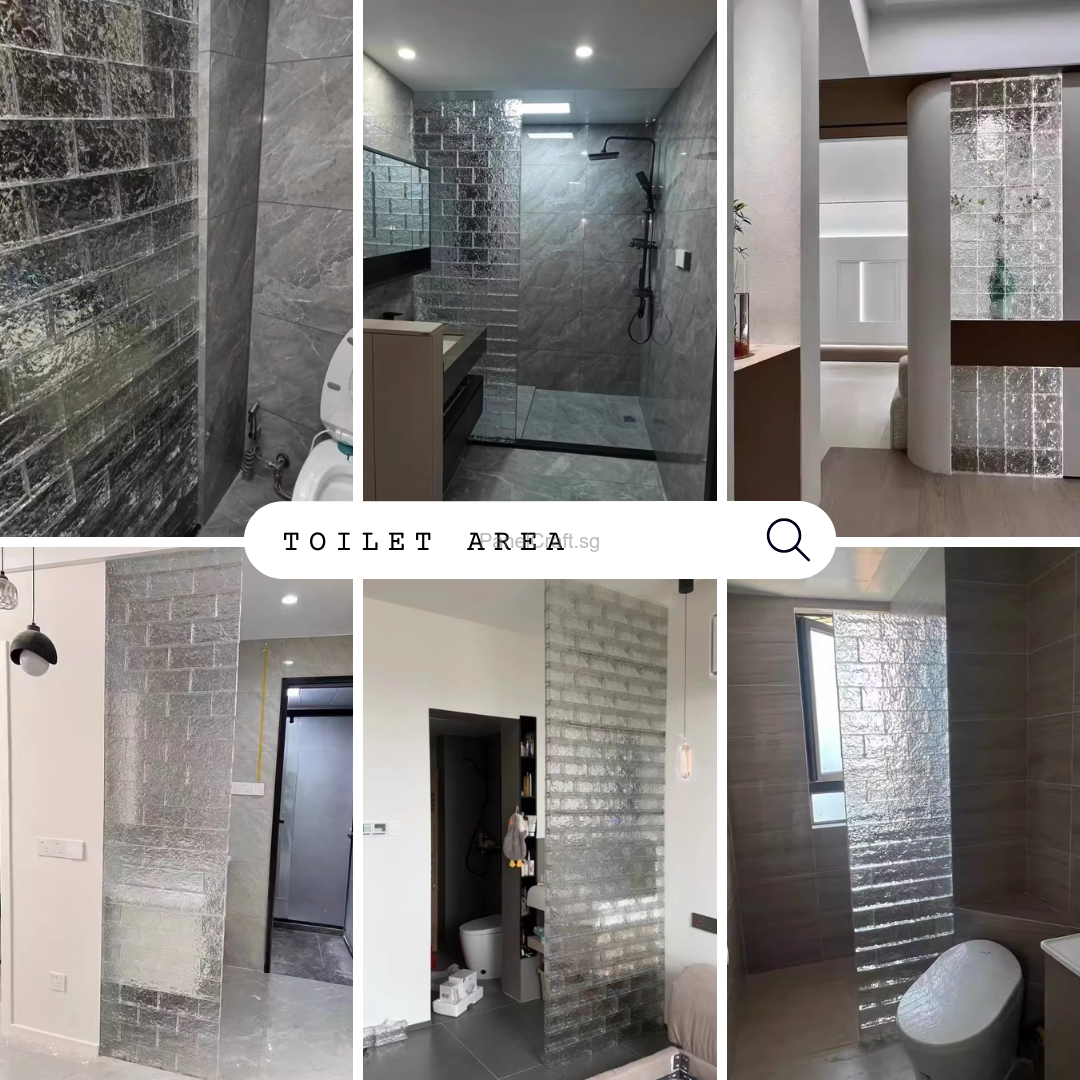
Bathroom / Toilet Area
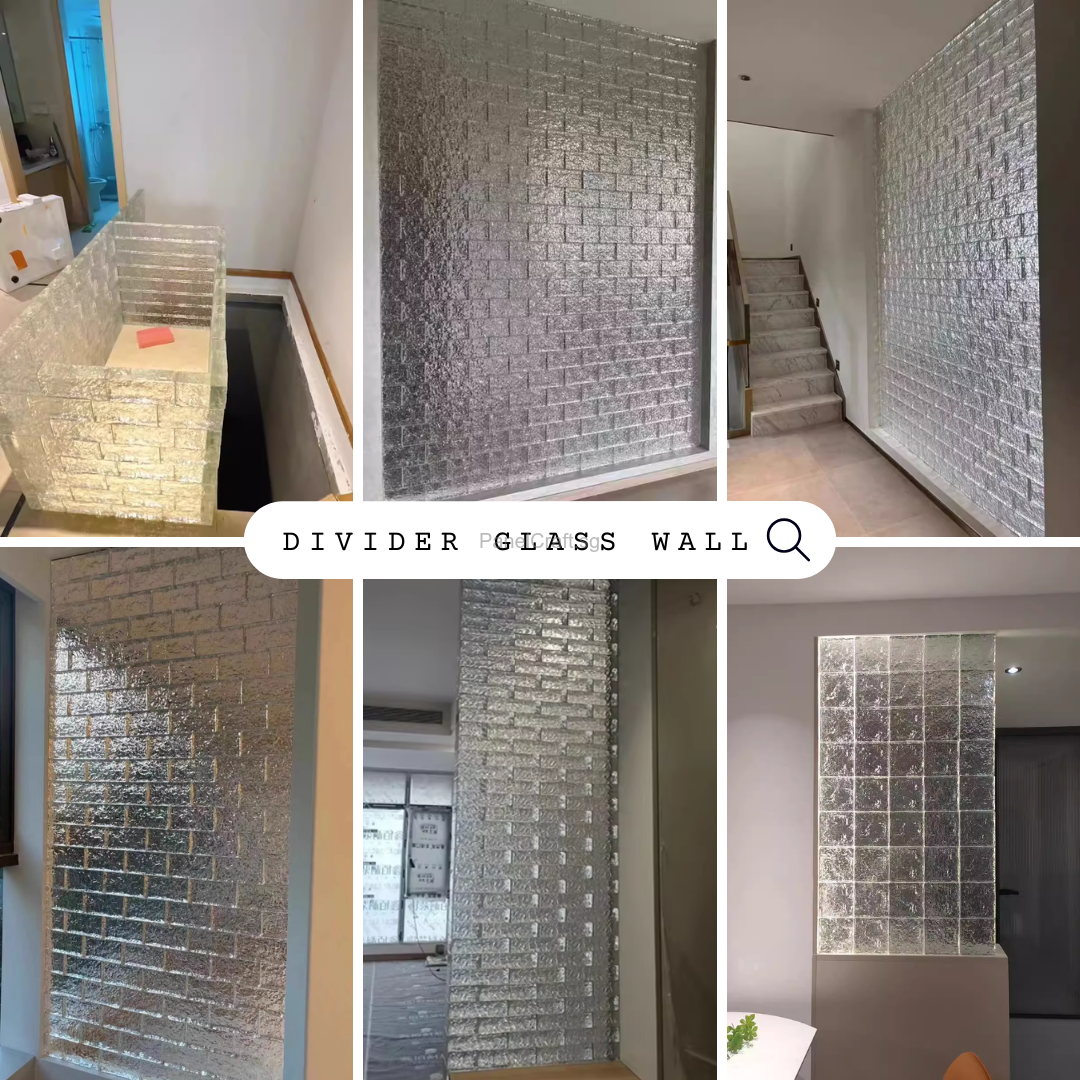
Divider Glass Wall

Modern Interior Feature

Decorative Style Reference

Completed Look
Planning a Glass Brick Feature?
Create Your Own Glass Brick Feature
Send us your approximate wall dimensions, preferred glass brick pattern and a photo of the intended installation area. Our team can assist with available options and quotation details.





WhatsApp
×